
What if the biggest procurement risk isn’t the price, but a mismatch between what your team needs and what the product documents describe? The right industrial chemical procurement questions can expose gaps in product identity, grade, intended use, or paperwork before a purchase is approved.
Price and availability matter, but they don’t establish that a chemical fits the application or that its supporting evidence aligns with the order. Buyers also need clarity on handling, transport, and requirements that may apply at the destination. When those details are unresolved, a confident purchase decision is hard to justify.
This practical pre-order checklist gives your team focused questions to work through before committing. Clarify the required product and specification, review evidence behind product claims, identify compliance questions for the relevant use and location, and pin down delivery details. Record what’s answered, what still needs evidence, and what must be resolved internally. The result is a purchase decision grounded in the intended use and applicable requirements, not assumptions.
Key Takeaways
- Start with the process need, required outcome, and internal approval so the purchase has a clear purpose.
- Use industrial chemical procurement questions to compare product identifiers, grade, composition, and specification across purchase records.
- Review current, product-specific documents for consistent product descriptions, supplier details, and revision dates.
- Align the order description, package format, destination, and delivery responsibilities before approval.
- Record evidence, reviewers, and open issues, then proceed only when organizational requirements and applicable reviews are complete.
Industrial Chemical Procurement Questions: Start With the Need
Start with the need, not a product description. These industrial chemical procurement questions help your team identify missing information before sourcing or approval. They don’t certify a chemical, verify its identity, or establish that it’s suitable. Use them to build a clear request, then route technical, safety, and legal judgments through the appropriate qualified reviewers.
- What process and application require the material?
- What outcome must it support, and who approved that requirement?
- Which requirements are mandatory, and which are preferences or assumptions?
- What quantity, package format, destination, and timeframe does the request cover?
What problem must the chemical solve?
Ask the internal requester to describe the process and intended application in plain language. What role is the material expected to serve? What result needs to be achieved? Record the answer as a performance requirement, not as a guess about which product will deliver it. A familiar product name or broad category doesn’t establish a match. Note relevant process conditions and operating limits for qualified technical personnel to assess.
Separate documented requirements from promotional descriptions and informal assumptions. For example, “must meet the approved specification” is actionable only when the specification is identified. “High quality” or “works for our process” leaves key criteria undefined. A broad chemical industry overview can help frame the range of sectors and materials involved, but it can’t determine what a particular operation requires.
What quantity and purchasing scope are actually needed?
Record the required quantity, package format, delivery location, and purchasing timeframe. Then clarify whether the request covers an initial order, recurring demand, or a potential bulk plan. These are different purchasing scopes, and combining them can obscure the immediate need. Ask the requester to explain the basis for the quantity and identify who owns any forecast for future orders.
Packaging is a logistics detail, not proof of application fit. Caluanie Muelear Oxidize is available in 1-liter, 1.5-liter, 5-liter, 10-liter, and 100-liter packaging. These formats illustrate why buyers should state quantity and package requirements explicitly. They aren’t recommendations for a particular use or order size.
Before the request moves forward, label each detail as a must-have, a preference, or an assumption to resolve. Tie must-haves to an approved requirement or relevant record. Preferences can guide purchasing choices but shouldn’t be mistaken for technical acceptance criteria. Assumptions need an owner and a next step, not an unexamined place in the order description.
Finally, keep responsibilities clear. Procurement can capture the request and identify gaps, but product suitability, handling, and regulatory applicability require appropriate qualified review against current, authoritative sources. If the intended use, required outcome, or scope remains unclear, pause the request and document what needs resolution before advancing it.
Questions That Clarify Chemical Identity and Specification
A product name is a starting point, not proof that a material matches the purchase requirement. The next set of industrial chemical procurement questions should pin down exactly what the quote describes and whether available records use the same identifiers, units, and specification. Treat mismatches as open issues, not details to smooth over during approval.
Which identifiers and specifications should align?
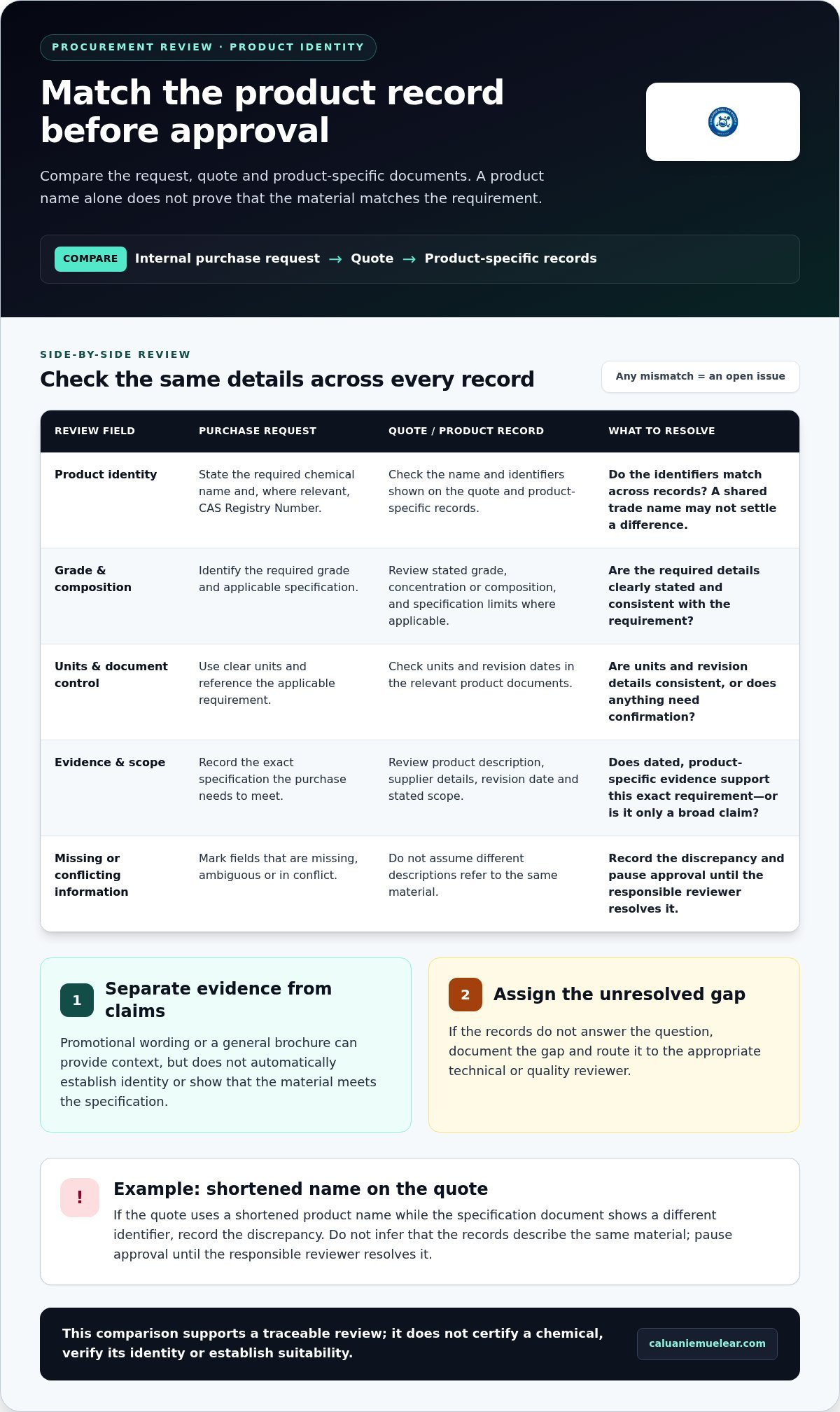
Ask which identifiers apply to the material, such as its chemical name and, where relevant, a CAS Registry Number. Compare them across the quote, product-specific records, and internal purchase request. Then check the stated grade, concentration or composition, units, and specification limits where applicable. A shared trade name alone may not resolve differences in composition or grade.
Use a simple comparison table to keep the review precise:
- Product description: Do names and identifiers match across records?
- Specification: Are grade, composition, and applicable limits stated clearly?
- Document control: Are revision dates and units consistent?
- Open fields: Is anything missing, ambiguous, or in conflict?
For example, if a quote uses a shortened product name while a specification document uses a different identifier, record the discrepancy and pause approval until the responsible reviewer resolves it. Don’t infer that two descriptions refer to the same material simply because they appear in the same order file.
How should teams distinguish evidence from claims?
Separate dated, product-specific documentation from promotional wording. A claim about purity, origin, grade, or performance needs evidence that applies to the exact product being considered. Check the document’s product description, supplier details, revision date, and stated scope. A general brochure or application statement may provide context, but it doesn’t automatically establish the material’s identity or compliance with your specification.
Ask internally: Does the evidence support this exact purchase requirement, or does it only repeat a broad claim? If records don’t answer that question, identify the gap and assign it to the appropriate technical or quality reviewer. Keep the decision traceable by noting which document supports each accepted specification and which statements remain unverified.
Don’t use appearance, odor, touch, or informal reaction tests to identify a chemical. Such observations aren’t a substitute for appropriate verification and may expose people or facilities to hazards. If identity remains uncertain, escalate it through qualified testing resources and established organizational procedures. Procurement should document the uncertainty, not attempt to settle it through improvised checks.
Before release, make sure the approved description in the purchase record matches the identity and specification supported by the reviewed documents. If your team is comparing listed materials, the Caluanie Muelear Oxidize product options show available product names and packaging formats. A listing or package format isn’t evidence of composition, suitability, or specification.
Questions About Supplier Records, Safety, and Regulatory Fit
Documents are evidence to review, not automatic proof that a purchase is suitable or compliant. Add these industrial chemical procurement questions to the record review: Which documents apply to this exact product? Are they current? Do the details match the purchase request? And who in your organization is responsible for interpreting safety and regulatory requirements? A complete-looking file can still contain mismatched product descriptions, outdated revisions, or gaps that need resolution.
What should the team ask about product documents?
Request the current Safety Data Sheet (SDS) and relevant specification documents for the product under consideration. Confirm that the product description and supplier details correspond to the order, and check each document’s revision date. Where relevant to the purchase, ask whether batch-related records or other product-specific records apply. Don’t assume a document covers a product simply because its name looks similar.
- Does the SDS describe the exact product and current revision?
- Do the supplier and product descriptions align across the SDS, specification, and quote?
- Are relevant records missing, inconsistent, or unclear?
- Who will obtain or review any outstanding documentation?
Log each gap as an unresolved procurement issue and assign an owner. For instance, if the quote identifies a product differently from the SDS, note the discrepancy and hold the review until the responsible person determines whether the records apply to the same material. The presence of an SDS or specification document alone doesn’t establish that all purchase requirements have been met.
Who should assess safety and regulatory requirements?
Assign interpretation to your organization’s qualified safety, environmental, and regulatory personnel. They can assess which workplace, environmental, and transport requirements may apply based on the substance, intended activity, and destination. Procurement should collect relevant records and route the questions. It shouldn’t make a compliance determination based only on a supplier statement or a document’s presence.
Requirements can depend on jurisdiction and context. Have the responsible reviewers identify which current authoritative sources and competent authorities apply to the purchase, then document the basis for their assessment. Keep the scope clear: requirements for a workplace may differ from those relevant to transport or a receiving location, so one review shouldn’t automatically be treated as covering every stage.
- Which jurisdictions and destinations are relevant?
- Who owns safety, environmental, and regulatory review?
- Which current authoritative sources inform the decision?
- What findings or unresolved questions must be recorded before approval?
Supplier records support review, but they don’t replace professional judgment or your organization’s established procedures. If documentation conflicts or reviewers can’t determine what applies, keep the issue open and pause the approval gate until the appropriate review is complete. This creates a traceable basis for the purchase decision without mistaking paperwork for a blanket assurance of safety or compliance.
Questions About Delivery, Receipt, and Purchase Approval
A purchase can be correctly described on paper and still be delayed by a mismatch in the order, shipment, or receiving arrangements. These industrial chemical procurement questions close that gap: Does the purchase order match the approved request? Who is responsible for shipment records and transport review? Who will receive the material, and what happens if something doesn’t align? Resolve these points before dispatch, not after a discrepancy reaches the receiving area.
What must be resolved before dispatch?
Compare the purchase order with the approved request and agreed product description. Confirm that identity, quantity, package format, destination, and delivery responsibilities are consistent across the records. Clarify any differences in wording or units before release instead of leaving receiving staff to interpret them.
Ask which transport classification and shipment records apply to the specific material and route. Don’t assume the same requirements apply to every substance, destination, or mode of transport. Have the responsible specialists review current requirements for the relevant jurisdictions and confirm who prepares, provides, and retains the required records. Make the handoff explicit: who tracks shipment documents, and who is authorized to resolve a mismatch before dispatch?
- Does the purchase order match the approved product description and quantity?
- Are the destination and delivery responsibilities clear?
- Have qualified reviewers determined which transport classification and records apply?
- Are any required shipment details or approvals still outstanding?
If the product description, destination requirements, required records, or delivery arrangements remain unresolved, pause approval. Record the open issue and its owner. A shipment deadline isn’t a reason to bypass review.
What should receiving staff check and record?
Before delivery, identify the receiving contact and make sure staff know which approved receiving procedure applies. They should follow site instructions and avoid opening or informally testing packages to investigate a concern. The goal is to document what arrived and route discrepancies to the people responsible for handling them.
Using the organization’s procedure, record the package condition, visible labels, shipment references, and any differences from the order or expected documents. If a package appears damaged, the label doesn’t match the approved description, or shipment records are missing, staff should escalate the issue under established site procedures. Keep the shipment information and observations together so purchasing and review teams can assess the discrepancy without relying on memory or assumptions.
Set a clear approval gate: proceed only after the order, shipment responsibilities, destination review, and receiving arrangements are resolved by the appropriate personnel. That gives procurement, reviewers, and receiving staff a shared record of what was approved and what to do if delivery doesn’t match it. For purchasing planning, view Caluanie Muelear Oxidize options and align order details with your organization’s approved requirements.
Turn Procurement Questions Into a Clear Purchase Decision
Good procurement questions should end in a record someone else can follow. Bring together the request, approved specification, supporting documents, review decisions, and open issues. The purchase should proceed only after organizational requirements and applicable reviews are complete. If a key answer is missing, approval isn’t ready.
How can a team record its decision?
Use one purchase record to connect the request to its evidence and decision. Keep the entry concise, but specific enough that reviewers can see what was checked and what remains unresolved. A practical record can include:
- Purchase need: The requester, intended application, and approved requirement.
- Order details: The approved product description, specification, quantity, and package format.
- Evidence reviewed: Relevant documents, their revision dates, and the requirements they support.
- Review ownership: The responsible technical, safety, environmental, regulatory, and procurement reviewers, as applicable.
- Open items: Each unresolved question, its owner, and the evidence or review needed to close it.
- Decision: Approval status, decision date, and any conditions that must be met before proceeding.
Be explicit about closure conditions. “Resolve documentation issue” is vague; identify the conflicting record and specify which responsible reviewer must determine whether it applies. Retain the purchase record according to organizational policy and applicable requirements so the basis for the decision remains traceable.
Where does the supplier fit in the process?
A distributor supplies listed products, while the buyer’s organization determines whether a material meets its specification and completes required technical, safety, and regulatory reviews. Keep claims tied to evidence; a catalog description alone doesn’t establish identity, suitability, safety, or compliance.
Caluanie Muelear Oxidize is available in 1-liter, 1.5-liter, 5-liter, 10-liter, and 100-liter packaging, alongside heavy water, oxidizing agents, and metal breaking chemicals. These are product and packaging details, not recommendations for an application or a substitute for reviewing product-specific documentation. Match the requested product and package format to the approved purchase record.
Use this final gate before committing: Are the request and specification clear? Do the reviewed records support the purchase? Have responsible reviewers completed applicable checks? Are delivery and receipt arrangements defined? Is every unresolved issue either closed or explicitly blocking approval? If any required answer is still open, hold the decision and document the next step.
Once your internal requirements are clear, you can review listed chemical categories and package formats as part of the sourcing process.
Make Your Next Purchase Decision Traceable
Turn your industrial chemical procurement questions into a repeatable intake and approval record. Keep the request, evidence, reviewer decisions, and unresolved items together, then make the approval status visible to everyone involved. That discipline helps the next purchase start with clearer requirements instead of assumptions carried forward from an old order.
As your team moves from internal review to sourcing, compare the approved requirement with the distributor’s listed categories and package formats. The catalog includes Caluanie Muelear Oxidize in multiple package formats, as well as heavy water and oxidizing agents. These listings can help identify products to review against your documented need, but product-specific evidence and internal approvals should guide the purchase decision.
Review the available chemical categories and package formats as you plan your next procurement step. A clear record and deliberate approval gate put your team in a stronger position to move forward with confidence.
Frequently Asked Questions
What questions should I ask before buying an industrial chemical?
Before approving an order, ask whether the requested material is tied to a defined process need and an approved purchasing requirement. These industrial chemical procurement questions should also cover the exact product description, required specification, order scope, delivery destination, and receiving plan. For example, if a requester names a product but can’t identify the specification needed, return the request for clarification. A checklist organizes due diligence; qualified reviewers still determine suitability and compliance.
What should I do if a supplier cannot provide an SDS?
Pause the purchase and ask your organization’s responsible safety or regulatory personnel to determine what product information is required for the specific substance, use, and jurisdiction. Don’t interpret the missing document as evidence that the material is either safe or unsafe. Follow your internal escalation process, record what information is unavailable, and wait for qualified review before making purchase, shipment, or handling decisions that depend on it.
Is a certificate of analysis enough to verify a chemical’s identity?
Not by itself in every case. A certificate of analysis may report results for a particular batch against stated parameters, but your reviewers need to decide whether it addresses the identity and specification required for the purchase. Check its product description, batch reference, stated test parameters, and scope. If those details don’t resolve an identity question, refer it to qualified technical personnel or appropriate testing resources. Don’t improvise a test.
Can a product name alone confirm its chemical composition?
No. Trade names, shortened labels, and application descriptions can be useful search terms, but they don’t independently establish composition or grade. Compare the name on the quote with identifiers and descriptions in product-specific records, and check that each record applies to the material being ordered. If naming differences remain unexplained, keep the discrepancy visible rather than treating similar wording as proof of equivalence.
How can a team tell whether chemical shipment requirements apply?
Have the responsible shipping or compliance specialist determine what applies to the specific substance and route. Relevant factors may include the transport mode, quantity, and jurisdictions involved, so a previous shipment isn’t reliable proof that the same classification or records apply now. Record the reviewer’s determination and supporting source in the procurement file. Don’t infer transport status from a product name or general description.
What should procurement teams document when a chemical order is approved?
Keep a retrievable record that shows what was approved and the basis for that decision. Include the final purchase description, the specification version used, document references, reviewer decisions, and any issues closed before release. For example, note which revised specification replaced an outdated one so future buyers don’t reuse the superseded record. Follow your organization’s retention policy and applicable requirements; a complete file supports review but doesn’t replace required approvals.
 English
  ភាសាខ្មែរ
  Русский
  Tiếng Việt
  한국어
한국어  简体中文
简体中文  Қазақ тілі
  ქართული
  日本語
日本語  Deutsch (Sie)
  O‘zbekcha
  Bahasa Melayu
  ພາສາລາວ
Recent Comments